Marlys Yvonne on Nuance, Self-Discovery, and Reclaiming Joy In Practice
- Jasmine Melrose

- Apr 20, 2022
- 19 min read
Updated: Apr 21, 2022
Marlys Yvonne, certified Pilates instructor, studio owner, artist, and creator of the Ara Movement talks to DECO about her journey and integrated approach to exploring and teaching movement. Marlys is articulate, thoughtful, and uses her experience and diversity to relate to clients and those around her. Her passions include deepening her knowledge of the body through peace and acceptance with what is.
Marlys reminds us of the importance of striping the labels and connotations we apply to our bodies, bringing us back to nuance, to joy, and to finding balance in the relationships that we have with both body and mind.
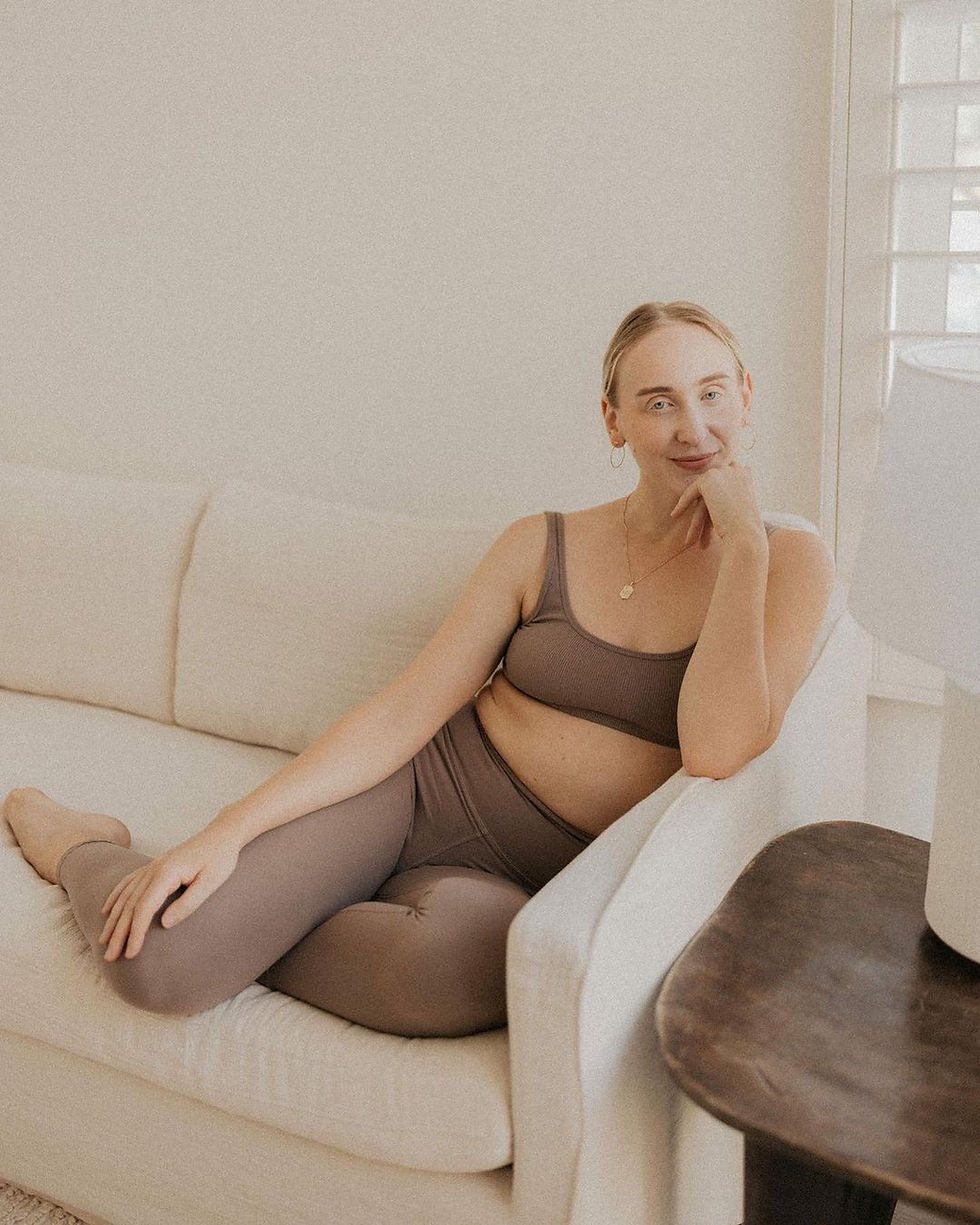
DECO interviews | Marlys Yvonne
Jasmine: Hey! Thank you so much for being with us today! I would love it if you could start with a little introduction so people know who you are and what you do before we dive into it.
Marlys: Yeah! I’m Marlys, I own and operate Ara. Ara is a boutique studio for Pilates and movement - it has a physical location right now in Indian Wells, California as well as a home online, as a virtual studio, so you can participate in Pilates and movement classes from anywhere.
My experience starting Ara was a sort of ‘backwards business’ - I fell into it before it really started to find form. So many of the narratives about the start of people’s businesses sound like ‘so I did this, then that, and then it happened! And then…I was an entrepreneur!’ And you're like, wait, what?
I know that I’m not the only one that feels like they came into their business backwards - figuring it out as they go. I appreciate when people are more transparent about how they came into their ‘overnight success’ - it would help to know that they worked a corporate job, had retirement savings, and then decided to start a company.
Jasmine: Thank you for saying this! It’s the truth, that just doesn't feel realistic at all, yet this is often the picture that is painted, especially with influencer culture and the way we see people teaching each other to grow businesses online right now. Not to mention others designing courses after their own successes.
Marlys: There's a lot of talk within the IG business community about ‘finding your niche’. I am open to the idea . . . this idea that you become this, really specific expert in something that you know really well, and that's what people seek you out for, because of your singular expertise. But what I've struggled with is feeling that, I, myself, well I am not a fucking niche, I have so much to offer and I've tried so many different avenues. My experiences brought me to the place I am now, and this place was not born out of a specific thing.
Having said that, I will say that my background, my experience growing up in dance and pursuing a dance career - that is a very niche focus. However, now, I am not working as a professional dancer. But it doesn’t mean that all of that work has just come to an end, I am just being sought out for a different reason.
Everything I have done up until now is part of me. So I think when starting a business you just need to start with something that you're really passionate about, it is helpful to be really clear, but not to deny all the other amazing things that you've done in your life, and the different amazing things that you can potentially loop into what you offer, because then it does become a unique business - because nobody has your history. And nobody has your experience.
So you know, coming back to this ‘influencer business’ advice - so much of it is like 'find your niche and then, boom you have it!’ And I'm like, what if I don't know what my niche is? Because it’s challenging to try to put yourself in a box, to distill yourself into one thing, and have a clear message without just denying the natural evolution and personal growth, the amount that we as individuals change. Also, during the course of our lives, you and your business are going to change.
Jasmine: I’ve had very much the same experience as a new small business owner. For a long time I struggled thinking, how can I present myself? What is my craft? What am I offering as a unique service?
The things we have done in our lives, our experiences, define how we interact with people, speak to people, see the world, and this is our essence. Trying to whittle all of that down into a niche I think discredits or diminishes this essence.
I cannot be hyper specific, I am a bunch of things and this is my story. So I completely agree. I have had loads of people tell me that I need a niche, and I think it's beautiful to hear and see that running a business can be more all encompassing. That it can in fact succeed and grow from a place of authenticity.
So on that topic, how do you approach authenticity online? What is the difference between your online community versus your studio and what challenges are involved?
Marlys: Well it’s challenging to translate. I am an “in-person, person”, and now I also have to learn how to translate that into the online space. Touching back to my history and my background of practicing for years, how to walk into a space with my body and express myself, it’s such a different thing.
So how do you pick up on that nuance, in an online or virtual setting, when so much of what's happening online is flashy, it's pink, sparkles, it's abs glistening in the light, it's click me, click me.
But the thing is, I have determined that my first language is not English. My first language is space. I understand things in space. A lot of my metaphors, a lot of how I think is spatially, which is probably connected to my experience as a dancer, but I think about how I want people to arrive at Ara, whether it's online or in the studio, and that has been incredibly helpful in trying to unify the experience. There's a smell, there's a soundtrack, there's a temperature, there's somebody that's there greeting you at the door, there's a visual aspect, it's everything working together.

So trying to just figure out what that looks and feels like online, you arrive to whatever space it is, be it social media, or our website, YouTube, or whatever platform, and I am really trying as much as I can, from the moment that you step into that world, to just be thoughtful about every aspect of it, because that's me and that’s how it is.
And that's 90% of what the experience is, and when we talk more about movement, there's something that happens to your body when you are in different spaces. When you are in a crowded setting, your body picks up on that energy, the aliveness, the kinetic potential, that vibe you might feel at an event or concert. The same applies when you walk into a museum, or into a gallery. The space or spaciousness around you, when you walk in, your posture changes, your voice gets quiet, you kind of have this moment, I mean, it’s amazing to observe how the body reacts and changes. And to me, that is really the start of everything. It's the start of how I want people to experience Ara.
Jasmine: I think this is so apparent, the narrative that you create online. I really see the care you’ve taken to create such feelings and shifts. The palette you use, the language you use, the message you are able to get across, it makes me just want to take a deep breath.

And what is so refreshing, speaking of having a niche, in regards to female business owners in particular, it’s all about empowerment, but it gets pushy. ‘Bitch get it, conquer the day!’ And sometimes I feel like, okay okay, I'm trying my best here. (laughs)
Does this approach or mentality ever trigger you? I mean, I’m sure you are thinking about what kind of words you are putting out there, and how you are directing your thoughts towards women specifically. And I’m talking about motivation, about bodies, movement, fitness and finding a balance within all of this.
Marlys: Absolutely! And the point that you just brought up about language, I think that is such an important tool in the online space, especially if you can't or don’t have a physical space, the words, the language, that's another way of trying to get people to be in a different state. And that's good to hear that you feel calm, because that's exactly what I want!
But I think this female power push you find in business, that's a huge thing that made me question myself in the past, like, do I have what it takes to be one of those people? Like, “come on, girl, let's do this, you got this, bad bitch” (laughs). Because in a group of people, I am the quiet one. I am not the one that's leading the conversation and in the past I have always been talked over. Just as a human being I am a listener, I have a lot to say, but I am quiet about it.
And it's actually taken me a long time to find my voice because again, for so many years, I've just been silent all day, talking with my body, but it’s always been somebody else’s words.
So it's been interesting, the process of finding my own power. It still feels quiet, but very powerful. It’s being connected to something grounded, completely undeniable, but also not in your face about it. And I think that really comes from a sense of true self confidence, self knowledge, and awareness.
And that really comes back to how I think about movement. How you pause before doing something, you take a moment to ask, okay, where am I? Where's my body? Maybe take a breath. And then start doing whatever. And the way that I cue in my classes, the way that I teach my classes, we do a lot of holds, which are fucking hard. We do a lot of slow movements, because it's harder to have that focus, it's so easy to just let the body use momentum to do the work.
It's also harder spiritually to just be quiet and slow, especially in today's society where everybody's being taught to go, go, go, and people love HIIT, people love cardio, people love the workouts that have the same pace that society wants us to be functioning in, which is basically, never to rest. To never take a moment for ourselves.
Jasmine: Right, I find that incredible, as someone who teaches, dances, understands, and appreciates the power of stillness and the power of nuance. The things we really need are often the hardest to find or practice.
Marlys: Something that has been on my mind as I continue to work with people and really hone in on what my method is, what my approach is, I realise that people are used to feeling like what they are doing is wrong, that they need to start a fitness regimen. And they have the idea that in order to do that, they need to completely overhaul their life, stop doing this and start doing that. You know, really go from zero to 100.
But the same goes for slowing down. I mean, I think part of the reason why it's so challenging for people to slow down, is because they don't let themselves do it gradually. I mean, there is something really powerful about just being able to say like, fuck, I'm going to a yoga class, and I'm going to just try to sit still for the first five minutes, but it doesn’t work like that does it?
Something that I've been thinking about when I teach is, always trying to be gentle with people, to ease people into things. To figure out how to get them from A to B, but also remind them that it’s ok to be where they are right now too. Or how they can bring what they find in class, back out into their lives. To keep that sense of space, ease or, avoid feeling like they have to drastically change. Like, I need to get this mindfulness app and be quiet for 90 minutes and I'm like, nah girl, just try it for 30 seconds. We'll get there.
Jasmine: We always need to take everything to an extreme, don’t we (laughs) We cannot just start with one yoga class, we buy the unlimited membership and commit to a new life.
And back to the same theme of finding balance, which is so lacking in the fitness industry, it's always extreme be it diet or exercise culture. It's so rare to come across people who are teaching movement who are also talking about NOT moving too.
What made you want to do it differently?
Marlys: You know, there was a very specific time in my life, after dancing professionally, doing that all day long, that I came back home to Baltimore and I took a year off. A year where I didn't have anything, I didn't have a job, I wasn't involved in any artistic projects, I really didn't know what was gonna happen next. It was a year of really just sitting where I was with what I had.
And it's hard, because I remember at that moment, not really understanding any of that. But since then, looking back on the lessons that I learned, this was actually what my current vision came from, but at the time, I was just confused about it all.
What that period of time really helped show me was, I was moving at a pace prior to that, that was just non stop. No time for rest, no time to really think at all. I was so deeply entrenched in the dance world that I knew, if I wanted to go to the next step, I knew how I had to position myself to be there. In that way you are just kind of working the system as best you can.
Now, being somebody who is not exactly what the system wants proved to be very challenging because I got a lot of rejections. So at the end of that, I had a lot of questions about my life. I was unhappy. I didn't like how my body felt. I didn't like how I felt. And then there was a moment where I had to choose. What did I want to do? Was I going to change my reality by attacking myself or by changing how I was thinking?
Again, at that precise moment, I don't think I could have articulated that. But I think that was the real shift.
And of course, I still had a lot of toxic ways of talking to myself and a lot of toxic ways of behaving towards myself. But there were a few times in that year, where I could feel myself looking back, I could see myself choosing my thoughts more carefully.
One big example of this shift was, coming home to all of these clothes from the years when I was really, really dancing, and none of them fit. I was like, you know, in my head, I thought, I'm so fat, none of my pants fit. But you know what, it had been six months that I hadn't been dancing, my body was just trying to heal itself by holding onto any nutrients that it was getting, so whatever, I gained some weight. And rather than looking back at my old self, and saving those clothes, I was like, fuck it, let's just donate them and start fresh.
So that choice to just change how I thought about it versus being like, oh my god, I'm failing, I need to get back into these old clothes that represented me at a different time. Instead I chose to just get rid of them, and then figure it out.
And you know, I see this all the time working with clients who are stuck in a place very similar to where I was. Now they're in a different stage of their life. A lot of people that I work with are in their 50’s, 60’s, or 70’s, and they are just now trying to figure out that relationship with their bodies. And so every day, I think, oh my gosh, I feel so grateful that I started thinking about this when I was 22.
Jasmine: I think a dancer’s path is so specific and challenging because we are always being told that we need to change. The reality is, someone is always going to want you to be skinnier, for you to change your hair, or the way you dance. We are always fighting against ourselves and having to adapt in every aspect of who we are.
After my injury there was suddenly this stillness, in this absence without dance. I had to sit down and ask myself, how many versions of myself have I been? How many languages have I learned? How many times have I started over, all in the name of dance?
I still fight with regret that I have wasted my whole life hating myself and that I wish I had had the capacity to be kinder, more forgiving all along. But that maybe is my purpose now, to help other people practice that.
Have you ever had to fight this sort of regret?
Marlys: That's an interesting question. I don't have many of those feelings. Which is interesting. It's not something I think about very often, and I'm happy about it just because it allows me to think more about what I'm doing now or what is ahead.
I have a lot of respect for myself in that way because I know that I was just doing my best at that time. I certainly made my mistakes but I made them. I learned from them and then I made them again, and had to learn from them once more. I don't know if it's as easy as saying that I wouldn't be here if I hadn't gone through all that shit because I don't think that suffering creates enlightenment, that's something I know for sure. Because I suffered a lot and didn't get much from that.
When I look back at my younger self, I really was just trying to do the best that I could with what I had. I am very lucky to have really wonderful parents that were always there for me. So even in the worst of times, or even in the times that I felt like I couldn’t connect to my true self, at least I had somebody that could bring me back to that. Someone who could ground me. And again, I still made many choices and acted in ways that weren’t aligned with who I am. But I think that I was very lucky that I, at least, had people around me that were present. At least I didn't get so lost in those times.
Jasmine: What you just said, about doing the best you could. One quote that has helped me battle this guilt, I remember reading it and thinking wow, it said, "forgive yourself for the things you did in survival mode”, and I thought damn, I’ll have to tattoo that somewhere so that I never forget it (laughs).
I think about how maybe 90, dare I say 95% of my life was about functioning in survival mode. So I remind myself of this quote when I feel myself falling back into that regret.
So when we allow ourselves to enter a state where we are not fighting, fighting our environment, our emotions, our thoughts and selves, that’s when that authenticity can come out. Not fighting to fit into your old jeans, not fighting to fill someone else’s needs, not fighting to be who people expect you to be.

Marlys: You know, your point is so, so paramount, and I think this is the heart of this conversation, especially on social media where everything is like ‘be authentic, be your authentic self, you're not going to get any followers if you're trying to be somebody else, be yourself’ and you're like, I don't know who I am!
Especially this sort of new trend on social media, the ‘I have flaws, and I love them, I’m not perfect but I love that about myself’. You make an incredible point, to find your authenticity, you do have to be in a place where you are not fighting, where you are not just functioning in survival mode. You cannot connect to yourself there and that's a huge pillar of what we are trying to help people feel.
We cannot individually solve world peace, even though we try, but what we can do is stop the fighting of the individual with themselves. And everybody's story is going to be different. Everybody's reasons for why they want what they want are going to be different. But the more we can inspire even just simple conversations or change the way you talk about yourself, instead of saying my “bat wings”, let’s just say arms. Let's just try a tricep exercise, let's see how it feels to be strong in the area that you are feeling uncomfortable about. You don't like the back of your arms, that’s ok, but let’s take a look at how much energy you are putting into how much you hate them.
Let's try to change that energy into, not necessarily needing to love them, but let’s give them something to do. Let’s give them a purpose. And let’s channel that energy we are putting into changing our bodies and put it in a way that's going to be helpful. And again, it's not all about feeling, ‘god I love my flabby skin on the back of my arm”, it’s just like, okay, this is my arm. Let's just start there. Let's take away any of the descriptors. This is my arm, let's just end that sentence there.
Jasmine: You just touched on two things that I think are incredibly important. Which is, I cannot tell you how often I have people come up to me and say, I really hate my “hip dips” or my “bat wings”, my “love handles”, and you won’t believe how many times I’ve stared blankly at them and said, “I’m sorry. You're what?” Because I don't know what a hip dip is. I learned what a hip dip was like a week ago from an Instagram video and I find it so sad to think that we label our body parts like this.
And this brings me back to the idea that, the language we use, this aggressive self love or aggressive self loathing. No one is teaching us about stillness, coming out of survival mode, being authentic, about patience.
It's missing the nuance, as you put it. And this is also one of the huge challenges of being in an online space, it’s always the extremes that sell.
No pain no gain, or love yourself no matter what. We even have people out here loving their IBS and I’m thinking wow um, that kind of bloating is a sign of a medical issue that needs to be addressed, this is not the kind of self love we should be encouraging. But this kind of content gives people an incentive to sell you their greens powder or some other “just this one trick” product. And if it isn’t a supplement, it’s a program, it’s Keto or Paleo.
Marlys: And for this, part of what my messaging continues to be, and I’m passionate about it. The only way that you're going to understand what is best for you is to connect to you. And that is really hard, let's just all accept that it's very challenging to not be influenced by others.
Yes you can be inspired, supported by others, but you have to find your practice and learn how to support yourself. Again, the more you set yourself up with stability, in your life, in your relationships, in your family, in your living situation, as best as you can, the more your body will be in a state where it can actually relax and tell you the things that it's been wanting to tell you all this time.
Then, once you truly start to notice those symptoms, those issues, the messages you have been ignoring, that is when you will really start to heal. Because your body has been talking to you all this time and thinking, “she’s just not getting it”, we have to flare up even more for her to notice.
Jasmine: Reducing the noise, yeah, this is hitting me hard. This theme of peeling off the layers rather than putting more on. About listening, about authenticity. And about how we are doing it backwards by looking for these things outside of ourselves.
Thinking that we can acquire these things, that someone else is going to give them or sell them to us. And the more we can learn to quiet all the noise around us, the more our body will flourish.
Marlys: Yeah and I think that circles back really beautifully to that question, how do you create a presence in the business world, whether it's having a personal brand, or you have an online business, what is your message? How do you communicate what's important without making it about selling something? How can we teach people that they can figure it out on their own?
I mean, you can be giving people all the right tools, that’s important, but it’s not as sexy or as shiny as the easy way out, which is essentially - do what I do because I am right and you are wrong. That is what we are used to buying into.
We get the: ‘if you do it like me, and work hard enough, then you're gonna look like me, and oh, now you don’t look like me… well then you didn't work hard enough, you should probably buy programme number two.’
Jasmine: Oh yeah, I mean, they need to keep that sales funnel going! How do you keep people coming back otherwise? Sadness and lack of contentment sells in the fitness industry. This industry is great at convincing people that they are not enough.
Marlys: Right! And the false promises, but again, that’s what the fitness and nutrition or diet industrial complex doesn’t understand. I think people are smarter than that, people are ready. And especially now, I see it happening on social media. I feel like people are ready to actually come to terms with all of this. And I think that we are ready to figure out what's actually good for us, or best for us individually.
I’m starting to see more conversations about being able to express your individuality, gender identity, or just how you are different, your uniquenesses. I think these conversations are moving us in the right direction. The thing is, the general population is a prisoner to an ideal body, when your BMI just isn’t based on any diverse reality. And so we have to break down some of those old, institutional ideas in order for everyone to have their own space to figure out how they need to be.
Jasmine: The beautiful thing about that is, it’s a way to come back to this idea of community. And when enough people push for new ways of looking at things or demand change and accountability, when we start to drop these tendencies which are fundamentally flawed, that’s when we gain more control of the system.
Marlys: And that is something that I have really had to ask myself, as a white, thin bodied woman in the fitness world, like, how am I helping? How am I helping those voices to come forward? Now, I don't pretend to speak for anyone other than myself. So maybe I could start by sharing what some of my clients have experienced, while really trying to stay in my lane.
I don't pretend to understand what it might feel like to be an amputee and try to do Pilates. However, I have a client who doesn't have a leg. So let's chat with her and see what her experience is. So remaining humble in what you know, and what you're prepared to learn. Knowing when to sit back and listen, and let someone different take the stage.
At the end of the day, I teach movement, and connect with a lot of people who want to feel better in their bodies. So maybe starting with the right vocabulary, and then guiding them from there.
Because I think it’s also important as a business owner, you know, the classic quote, “the only thing that is known, or the only thing you can count on is change”, you must always be prepared that things will change, because they will. So, be able to have that as part of the foundation of your business. Listening, responsiveness, attention. This is going to set you up for success in more ways.
Jasmine: Wow. I feel like that was a really beautiful culminating point, actually. That change is the only true constant.
...
Want more of Marlys & the Ara Movement?
Follow these links to learn more about where you can take class with Marlys or catch her online.

Jasmine Melrose
Director & Founder of DECO the Blog
Jasmine Melrose is a Toronto native living in Amsterdam. Once a professional dancer, her passions include movement, fitness, yoga, healing, and all things vegan. Jasmine is a 500-hour trained yoga teacher, who loves to get you deeper into your practice. She is also a certified barre teacher who loves making raw vegan, guilt-free and good-for-you treats. Check out her recipes and articles on everything from fitness to yoga, to notes on a journey towards healing.


Comments