8 Books On Yoga That Every Yogi Should Read
- Jasmine Melrose

- Jul 27, 2021
- 10 min read
Updated: Feb 13, 2022
Deepening one’s understanding of yoga won’t always happen just by attending classes. If you feel like you’ve reached a point in your practice where you are feeling strong and connected physically but something seems to be missing, then it’s likely that you need to begin digging deeper to understand yoga as more than just a physical practice.
No matter where you are in your yoga journey, whether you have just started taking class, or you have been practicing for years, or even if you are a yoga teacher, it is important to remember that, acquiring new knowledge never stops.
"We always want to be in a state of evolving and growing, the joy in expanding one’s horizons never ends."

So what can you do if you want to learn more about yoga?
Reading books is one of the best and most affordable ways to invest in your practice, books provide a depth of knowledge that cannot fit into an hour long yoga class. These books often provide the reader with tools that can be applied to everyday life, on and off the mat.
These 8 books will give you a great foundation, but of course, read as many books as you can! There is no such thing as going in too deep when it comes to yoga.
Yogi Book List: For the Inquisitive Yogi

The Bhagavad Gita
The Bhagavad Gita is an iconic source of yogic philosophy. The Gita takes place on the battle field of an impending war and it reads as a dialogue between the heroic archer, Arjuna and Krishna who is said to be a descended form of god. Arjuna is faced with a moral dilemma and experiences doubts about himself on the battle field. Krishna counsels Arjuna through the wisdom of yoga to fulfil his duty as a warrior.
The Gita is often criticised within the yoga community as, at first glance it appears to go against the first of the Yamas, Ahimsa or non violence, found within the Eight Limbs of ashtanga yoga, written out in the Yoga Sutras. However, it is important to understand that the narrative of war is used as an allegory or a metaphor for the constant battle we fight everyday, the war we fight with ourselves, others, and the one we face in our quest for self realisation.
The Gita helps us to see that we cannot run from our feelings and responsibilities, nor can we suppress our emotions and our pains. We do however, require tools to help us cope with and face our conflicts and battles, and yoga provides us with these tools.
For a more detailed breakdown of the The Bhagavad Gita click here.

The Yoga Sutras of Patanjali
The Yoga Sutras was written approximately 2,000 years ago by Patanjali and it was actually a British scholar who uncovered the text when the British were occupying India. The Yoga Sutras is one of the most valued and referenced yogic texts that we have access to today.
Sutra meaning thread, the sutras are threads of yoga, and just as clothes are held together by threads, the sutras act as pieces of thread that hold the fabric of yoga together. There are approximately 195 sutras found in the text, they are short and concise, as historically, they were written in order to be memorised by students.
There are 4 chapters found in the Yoga Sutras, each serving a distinct purpose. The text begins as the first chapter “sells” it all to you. Sells the idea of bliss and happiness and what it means to be one with the divine and in connection with one’s highest self. This chapter is the “hook”, it tells you all about what things COULD be like, as this first chapter proceeds to outline some of the obstacles and benefits of the yoga practice.
The second chapter takes that idea you now have of what things could be and reminds you that NOTHING, especially yoga, will ever be easy. This chapter is all about the effort, the work to find the bliss. Also found in this chapter are the outlines for the 3 step path of Kriya (cleansing) yoga as well as the 8 step path of ashtanga yoga.
The third chapter is all about what one receives with a consistent yoga practice. This chapter begins with the last three steps of the eight limbs of ashtanga yoga.
This chapter focuses on the elevated state, and becoming more than the human form, surpassing the ego. The question is, can we, with great focus, embody the teachings in this chapter? Long contemplation, can produce answers, knowledge, realisation. Do not underestimate your capabilities in this regard, what focus, commitment and embodying something can do to you and for you.
The fourth and final chapter is short, acting almost as an overview of the previous chapters. This chapter outlines the understanding of oneself alone, and yet with the world. Independent and yet, integrated. Standing on your own two feet, yet knowing that you play a part in the web of all things and beings.
The fourth chapter provides us with a two step plan for yoga - how to practice yoga and detachment from the benefits and rewards of yoga. In this chapter we see how yoga as a concept and as a philosophy is transcendental.
For a more detailed breakdown of The Yoga Sutras click here.

Hatha Yoga Pradipika
Svātmārāma
The Hatha Pradipika is the oldest surviving text on traditional Hatha yoga, and it serves as a guide for the physical practice. The translation of Hatha- from Sanskrit to English is force or power, contrary to the Hatha yoga classes we see today which are recognised as rather soft.
The Pardipika was compiled in the 15th century by Svatmarama, and it includes 4 main chapters on each of the main concepts of traditional hatha yoga: asana - in which 15 asanas or postures are highlighted, pranayama and kriya or cleansing practices, mudras or seals, and bandha, and samadhi, the highest state of consciousness achieved through the practice of nada or sacred sound.
In the Pradipika, we learn the importance of cleansing the physical body through asana, and the importance of cleansing the energetic body through pranayama and kriya practices, we explore the chakra system and how it facilitates in the awakening of consciousness, how to perform various seals or mudras that can help us contain our energy and/or redirect it. We also learn about nada yoga, the yoga of deep inner listening and connecting to subtle vibration.
Hatha Yoga is defined as the joining of the “sun” and “moon”, the sun referring to the masculine energy channel of the body that runs though the Pingala Nadi, and the moon which refers to the feminine energy channel of the body, the Ida Nadi. When these energy channels are balanced, one can access the central channel, called Shushumnah Nadi.
If you would like more information on Pranayama click here.
The Hatha Yoga Pradipika serves as a reminder that, yoga is not passive, it is powerful, and its origins are far from what we know Hatha to be today. Hatha did not used to be popular, nor was it a healthy or easy practice.
Traditionally and historically it was practiced in order to have a sort of “superpower”, to be able to embody the practice wholeheartedly, to hold the state of yoga within a human container, the body.
For a more detailed breakdown of the Hatha Yoga Pradipika click here.

2,100 Asanas Daniel Lacerda and Mr. Yoga
2,100 Asanas is an extensive and beautifully crafted catalogue of yoga poses that showcases the truth of asana, that yoga as a practice is that of beauty and pure athleticism. All 2,100 asanas featured in this book have a photograph of the posture performed in correct alignment, with the Sanskrit name of each posture with its English translation.
The book also includes modifications of the postures so that they can be accessible for everyone. The book also outlines the corresponding Chakras that are affected by each posture to give readers a well rounded depiction of what each pose can do for them.
The aesthetic of the book is clear and inspiring. The book is well organised, moving through the eight (main) types of poses, from standing, to seated, core, quadruped, backbends, inversions, prone, and supine postures. The book also provides a range from beginner to most challenging.

If you are a yoga teacher, this book is a beautiful way to keep your sequencing inspired and find fun peak poses to teach students. This book serves as a reminder of the power the physical body holds and just how vast the yoga practice is.
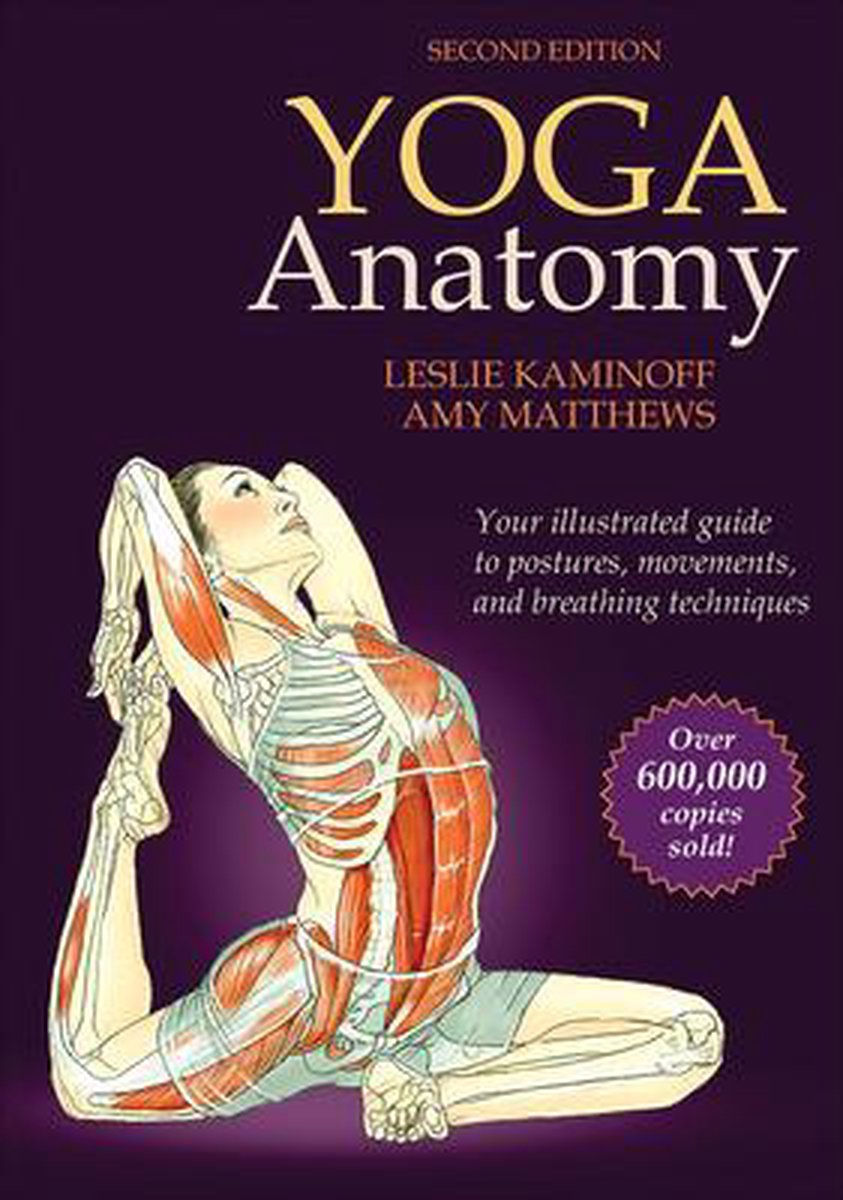
Yoga Anatomy Leslie Kaminoff and Amy Matthews
Yoga Anatomy, the best-selling anatomy guide includes not only postures but full-colour anatomical illustrations, in-depth information for an all encompassing understanding of the principles and anatomical alignment and harmony of each movement and posture.
The book also includes information about how breath should be used in everything from inversions to standing poses, and allows us to understand how specific muscles respond to certain asanas, and how any alterations or modifications of a pose can enhance or reduce the effectiveness of the asana.

Despite being quite technical, this book is for all yogis, whether you are just a beginner, or you have been practicing for years, this book will serve as a useful resource to ensure safety, clarity and provide insight for those passionate about the physical practice of yoga.
This book is also an invaluable resource for yoga teachers to provide students with more information about the anatomical correctness of the body, making this book the ultimate reference for yoga practitioners, instructors, and enthusiasts alike to master an understanding of the physical workings of the yoga practice.

Light on Yoga B.K.S. Iyengar
Light on Yoga brought yoga to the west nearly 40 years ago, published in 1966, the book remains not only relevant, but is still regarded as the “bible” of modern yoga, B.K.S Iyengar as the “father of modern yoga” created an essential guide of both the philosophy and the practice of yoga for students and practitioners of any age and every level.
The book includes photos and instructions of both asana and pranayama, moving through yoga sequences designed to help heal and recover the body from a range of illnesses and conditions.
This book is highly focused on curing the body of illness, which later led to the technique of “Iyengar Yoga”. Iyengar yoga is still practiced this way today, slowly, with all of the postures held for a long time.
B.K.S. Iyengar was taught by Krishnamacharya, when he began his journey with Krishnamacharya, he was very sick and unable to move a lot. Therefore the practice taught to him was very slow moving and included the use of many props for assistance. Iyengar practiced and therefore taught yoga in this way, the technique remaining the same today.

BKS Iyengar devoted himself to a lifelong practice, full of study, teaching, and learning until the age of 95. Over his lifetime he shared his knowledge, wisdom, love for yoga, and his belief that yoga is for everyone. That yoga could bring us together, it could unite all people despite our differences.

Chakra Healing: A Beginner's Guide to Self-Healing Techniques That Balance the Chakras Margarita Alcantara
Chakra Healing, is exactly what it promises to be, a comprehensive, but not overwhelming insight into the charkas and how to heal them via changes in your diet, behaviour, the use of essential oils, yoga, meditation, and healing crystals.
Each and every one of us is born with a physical body as well as a “subtle” or energetic body, here is where we find the chakra system. With 7 main, powerful centres or wheels of energy.
Every chakra holds the potential for healing and restoration of the body. This book will show you how to harness the power of the chakras, featuring a beautiful collection of beginner-friendly exercises, techniques, that can easily be added to your daily routine.
Chakra Healing begins with an overview of the chakra system and myths regarding chakra work and healing, then each of the 7 main chakras are covered, including affirmations, elements, crystals, essential oils, illnesses, symptoms and physical or emotional issues, and yoga poses that correspond with each chakra.
It then moves through a variety of ailments that can be addressed via chakra healing, yoga, and additional Eastern medicine practices such as acupuncture. A glossary of yoga poses and crystals is also provided for additional learning and clarity, making this book an easy and fascinating read.
The information presented is conveyed simply, making it easy for us to begin applying these healing techniques and incorporating them into our daily lives. Any effort, big or small will be important in delving deeper into your healing journey.
For more information on the chakras click here.

Myths of the Asanas: The Stories at the Heart of the Yoga Tradition Alanna Kaivalya and Arjuna van der Kooij
Myths of the Asanas written by Alanna Kaivalya and Arjuna van der Kooij, gives us insight into yoga as more than just a physical practice, but as a philosophy, a web of stories, and as mythology. When practicing yoga in the west, we use the Sanskrit names to preserve the history of yoga and as a sign of respect for yoga’s origins, however, not many students and partitioners know much about these names past their rough translations into English.
How many of us can say that we know about the myth behind Hanumanasana? It is named after the deity Hanuman, yes, but why? Or what about the myth of the Lotus flower and how it represents the path of the true yogi? Behind each asana is an ancient story about a god, deity, sage, or a sacred animal. This book helps us put a story to a pose we have practiced in class, giving us more context and understanding of the practice.
Myths of the Asanas is the first book to collect and retell all of these ancient stories, pulling the veil back, seeing beyond the surface of yoga’s spiritual tradition, giving us the opportunity to harness the full power of the asanas. Finding our full potential though the gateway of story telling.
Myths of the Asanas gives way to deeper insight, determination, and endless inspiration, with more than sixty illustrations, the stories take on new life and understanding for the reader, undoubtedly adding on a new dimension to your practice and study of yoga.
In Summary
It is clear that reading is one of the best ways to deepen our yoga practice beyond a physical level. The books in this list are all very important in terms of yogic history and the evolution of the physical and spiritual aspects of yoga.
The more we share knowledge as a community the more we will be able to grow together. Yoga has never been about withholding information but allowing information to transcend through the practice, it has always been about knowledge, and sharing through the embodiment of yoga teachings.
Book tip: Buy the book, not the ebook version!
The information will be better retained when it is read “traditionally”. Like this you can always fold, highlight, or add notes. These books can be read over and over again, each time you come back to them, you will notice something new.
Apply these teachings to your life, yoga is not meant to stay on the pages of books.

Jasmine Melrose
Director & Founder of DECO the Blog
Jasmine Melrose is a Toronto native living in Amsterdam. Once a professional dancer, her passions include movement, fitness, yoga, healing, and all things vegan. Jasmine is a 500-hour trained yoga teacher, who loves to get you deeper into your practice. She is also a certified barre teacher who loves making raw vegan, guilt-free and good-for-you treats. Check out her recipes and articles on everything from fitness to yoga, to notes on a journey towards healing.


Comments